

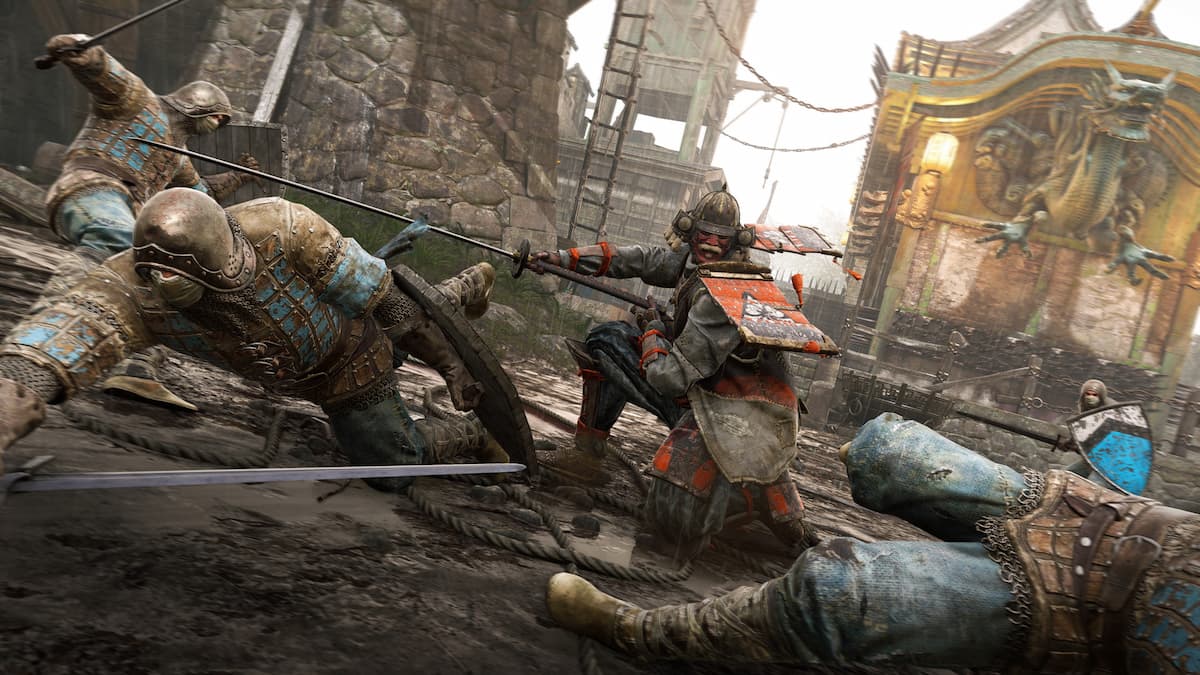
For Honor is on sale for about a dollar on Steam at the moment, leading many players to hop into the game for the first time. Released in 2017, it’s one of Ubisoft’s best multiplayer titles, and certainly among its most beautiful, serving to remind all of us what the company used to make.
I, for one, played For Honor back when it initially released almost a decade ago. It was as cool then as it is now. It had this innovative combat that was really one-of-a-kind during its time, combining elements of fighting games with a third-person perspective, adding a unique stance and blocking mechanic on top.
All of these blended perfectly well with each other, allowing you to duel others head-to-head or participate in group skirmishes, with pure skill making or breaking any given match.

Of course, with time, Ubisoft introduced a lot of sketchy updates to the game, including heroes that border on pay-to-win. But outcomes are, more often than not, still determined by raw player prowess, as no hero comes with inherent advantages that can make up for it.
Over the years, I came back to the game a couple of times, but made a huge break from it for at least the past three or four. Now, along the Steam Winter Sale, a friend of mine hopped in after I spent an hour shilling the game to him, leading us to become completely addicted to the simple yet immensely fun gameplay loop.
We’re primarily rocking a Raider and an Orochi, but we’ve both lately pivoted into the Lawbringer, a class we both initially hated because Knights in this game and every game with a medieval aesthetic are completely overpowered (and the most popular, naturally).
Each match, simple and same-y though they are, is a load of fun, rage, and sweat, with every player giving it their all for whatever reason. I’d wager it’s because most of the less hardcore people have been filtered out since 2017, leaving only those that actually care for the outcome.

This genuinely produces a better environment, as you’ll seldom come across people who troll, dodge, or leave mid-match. There are also no cheaters, a miracle for an older live-service game.
Everything sort of serves to highlight the greatness of an old Ubisoft, a company that used to deliver year after year, innovating on its own formulas, implementing mechanics from different genres, and experimenting with what gaming can achieve. An Ubisoft that made (and still does, though to a lesser extent) the most beautiful games on the market, using all the power of the Anvil engine to produce levels and areas of utmost quality.
Even now, For Honor‘s maps are some of the most stunning and breathtaking I have ever come across. Each time we load into any match, both me and my friend exclaim: “Man, this game looks good,” completely in awe at what Ubisoft had achieved for a relative side-project, popular though it was in its heyday.
The company continues to support the title, releases seasonal passes and new heroes every now and again, and has done so for nearly a decade, but I reckon it’ll never recreate what made For Honor so good and beautiful.
It did try to venture into the live-service sphere again with the fabled Skull and Bones, failing in all those areas where For Honor thrived, despite the almost invulnerable Black Flag foundation it was built upon.
It’s a true, crying shame, but at least we can still go back and play this incredible title. That is, until Ubisoft takes it offline, though the player count is currently helping keep it afloat.


